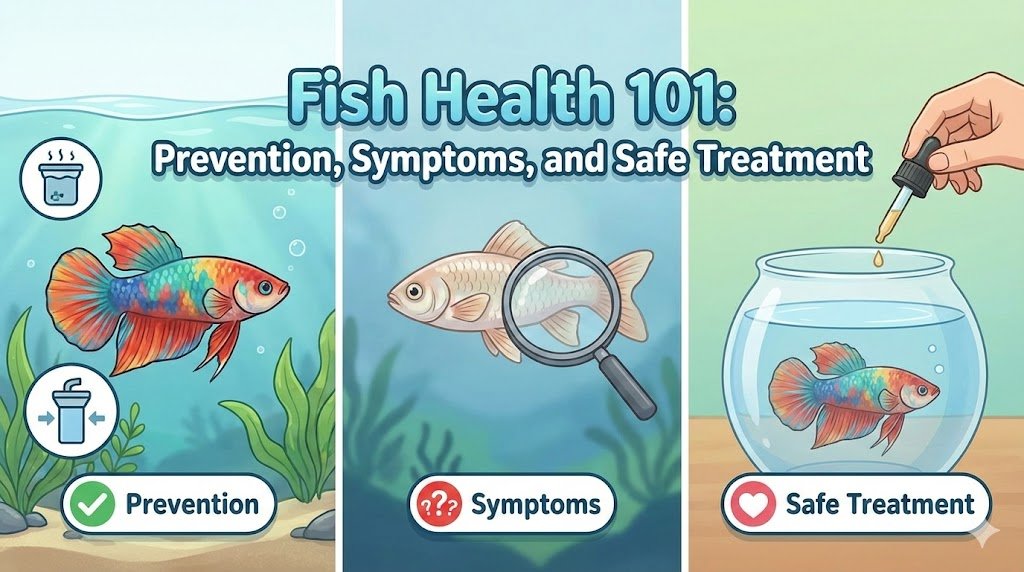
Fish Health 101: Prevention, Symptoms, and Safe Treatment
Introduction Fish diseases pose a significant economic strain on farmers. They lead to lower harvests, expensive treatments, and high mortality rates. However, most diseases are preventable if you understand the causes: Pathogens, Unsatisfactory Water Environment, and Low Fish Resistance.
Prevention is Better Than Cure
• Biosecurity: Always quarantine new stock and sanitize your equipment.
• Water Management: Regularly change water to reduce waste build-up and maintain 0 PPM Ammonia.
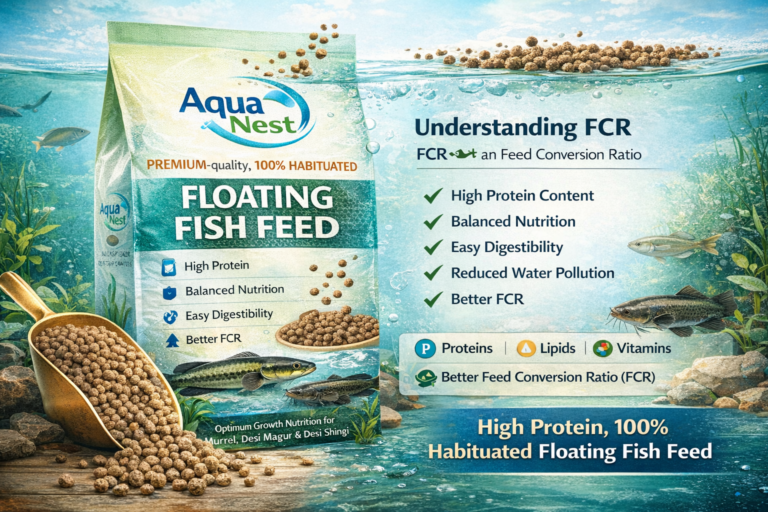
• Nutrition: Malnutrition makes fish weak. High-quality feed boosts their immunity against bacteria and viruses.
How to Spot a Sick Fish You should conduct a “Fish Health Inspection” daily.
• Stage One (Behavior): Look for reduced feed intake (the first sign of disease), swimming upside down, or rubbing against the tank.
• Stage Two (Physical): Check for excess mucus, body sores/ulcers, bulging eyes, or loss of scales.
Safety First: Using Medicines If you must treat your fish, you must protect yourself.
• Protective Gear: Wear safety goggles, gloves, and masks.
• Handling: Avoid contact with eyes, mouth, or skin. If medicine touches your skin, wash immediately with plenty of water.
• Storage: Store medicines in a cool, dry place away from sunlight.
Need Help? Early identification allows for prompt treatment. If you see abnormal symptoms, contact Aqua Nest for advice. We believe in helping our farmers succeed by minimizing risks and maximizing health.